
Read Carroll County Deed Records
The Clerk of Superior and State Courts accepts each instrument. Every one becomes part of Carroll County deed records. A recorded deed names the parties. It gives a legal description. It also cites a deed book and page, and it may point to a plat or an earlier deed. Read the full instrument. The index is only a finding aid. Security deeds, lien releases, easements, corrections, and tax deeds sit in the same books. Ordinary conveyances sit there too. Not all of them transfer the same interest. The instrument type matters as much as the names on it.
| Deed Type | What It Does | Common Use |
|---|---|---|
| Warranty deed | Conveys the stated real-property interest with title promises written in the instrument | An arm's-length sale |
| Quitclaim deed | Transfers only the interest the grantor may hold | Family transfers or title cleanup |
| Administrator or executor deed | Conveys property through an estate representative | Probate administration |
| Correction deed | Corrects a defect in an earlier recorded instrument | Name or description repairs |
| Sheriff's tax deed | Records a transfer following a delinquent-tax sale | Tax-sale property |
A deed conveys an interest in land. A security deed or lien works differently, securing an obligation against the property until a cancellation or satisfaction releases it. Georgia's real-estate index also covers plats and related filings. Those documents explain the record, yet no single one proves every claim has been cleared.
Carroll County's Recording Office
The Carroll County Clerk of Superior and State Courts keeps the official deed records. The office also holds security deeds, liens, plats, UCCs, and other real-estate filings. The Real Estate and Recording counter sits at 311 Newnan Street in Carrollton. It is listed for weekdays from 8 a.m. to 5 p.m. The phone number is 770-830-5830. Counter staff can help locate a book and page or explain copy access. They cannot offer a title opinion.
Remote access runs on two tracks. The statewide GSCCCA system carries the modern index and available images. Carroll also maintains a separate historic index. A reconstructed online entry can conflict with courthouse material. In that case, GSCCCA states that the Clerk's original index controls. That rule matters most for long chains and oddly indexed names.
Search Carroll Deeds by Party
The GSCCCA Real Estate Name Search is built around indexed parties rather than a street-address box. Pick Carroll County, enter a name, and add a party role, instrument type, or date range to narrow things down. The neighboring-county option helps when a party also recorded land in Douglas, Haralson, Heard, Coweta, or Polk County.
| Search control | How to use it | Carroll note |
|---|---|---|
| Party type | Separate a grantor from a grantee | Inspect the live dropdown before narrowing |
| Instrument type | Limit results to a class of filing | The full option list was not exposed in research |
| County | Select Carroll County | Neighboring counties may be included |
| Search name | Use surname and given name, or the exact entity name | Try prior spellings and initials |
| Date range | Focus on the likely transfer period | Enter dates in month/day/year form |
A result can show indexed party names and roles. It can also show instrument type, county, recording date, property location, and book/page. A linked image may open after account access. The index does not promise a full legal description in every result. The state deed-name form displays the search surface behind Carroll County property records.
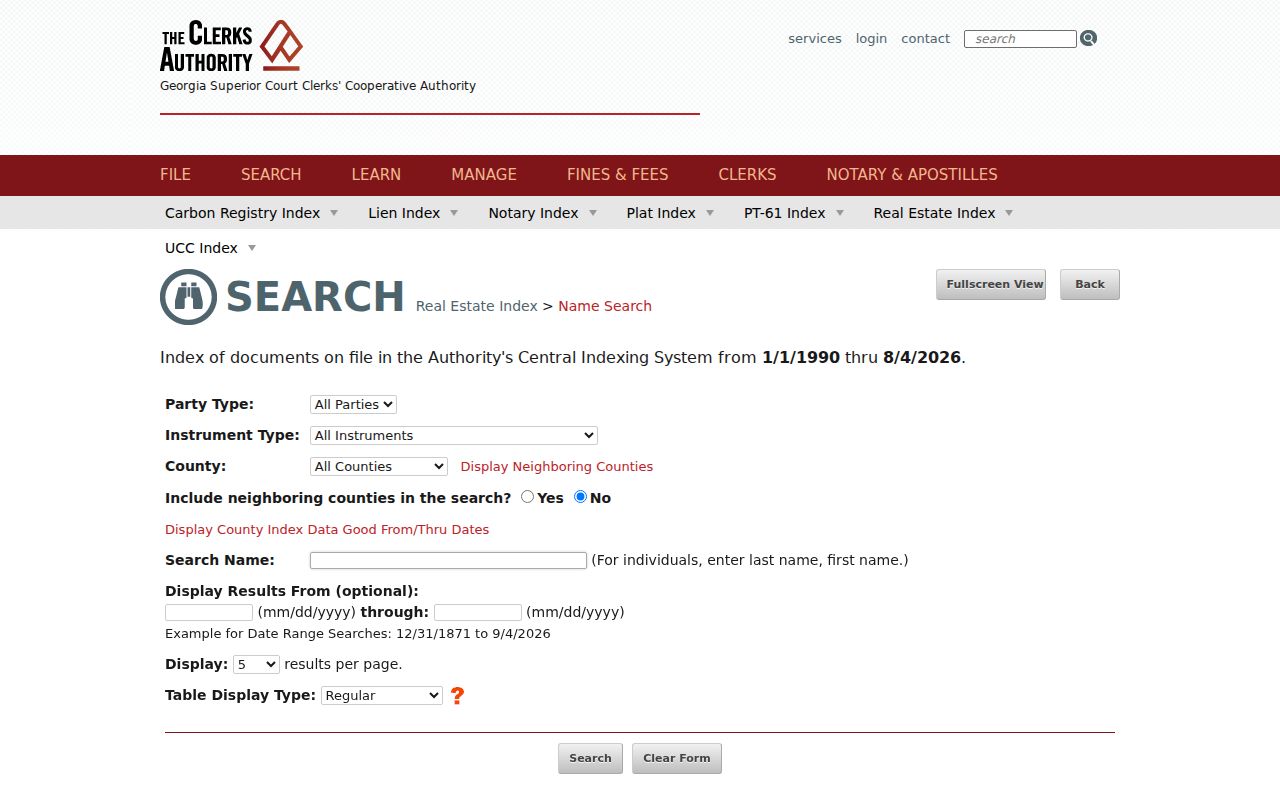
The form's county, party, instrument, and date controls explain why an exact owner name beats a street address here. That is how this deed index was designed.
Carroll Deeds Across Two Indexes
Coverage dates differ across systems. The GSCCCA name page displays central-index records from January 1, 1990. Its learning material describes a consolidated system operating by 1999. Carroll property-search data is listed from January 1, 1987. None of those dates marks the start of deed recording in Carroll County.
For older Carroll County deed records, use the Kofile historic land index. It spans 1828 through 1965 with Type, Year, Parties, Last Name, and First Name controls. The local genealogical society also points to deed-book images. Those reach from current volumes back to February 1950. Together, the two resources bridge old index books and the modern GSCCCA system. The Carroll historic-index screen shows the separate route that predates the modern deed index.
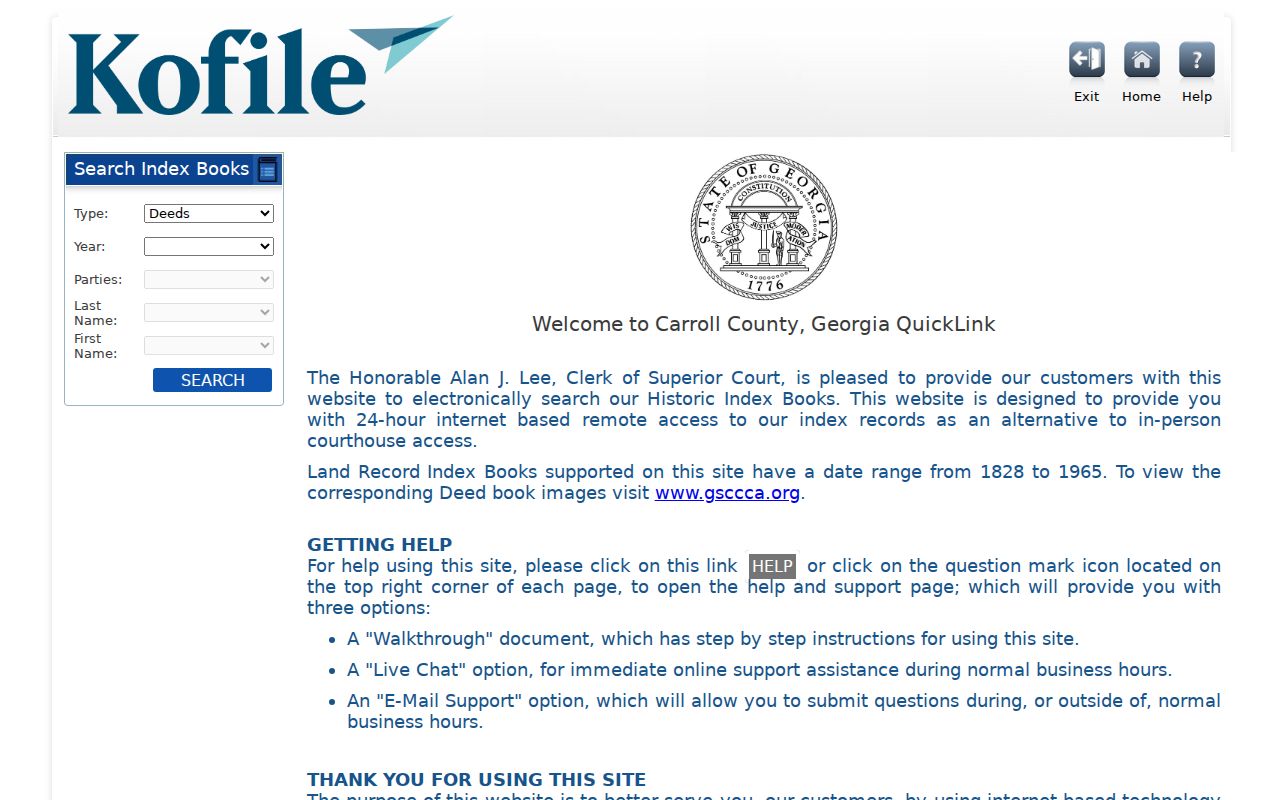
Its year and party controls let you carry a known name and time range into older deed records. That makes tracing early Carroll County conveyances far simpler.
Historic-index tip. Record the year, party role, instrument, book/page, legal description, and next grantor before moving between the two systems.
Trace Carroll's Grantor-Grantee Chain
A chain of title follows successive conveyances for the same land. Start with a current parcel record. Use the latest grantee and deed reference to locate the newest conveyance. Each grantor then becomes the next earlier grantee search. At every step, match the land through its legal description, acreage, subdivision and lot, map/parcel reference, or cited plat. A shared surname alone is weak evidence in a grantor-grantee chain.
- Copy the current qPublic owner name, parcel number, legal description, and any deed book/page.
- Search that owner as a grantee in Carroll County and open the most recent likely conveyance.
- Record its grantor, filing date, book/page, and land description. Then search that grantor as an earlier grantee.
- Repeat until probate, a tax deed, a correction, or an index cutoff changes the path.
- Move to the 1828-1965 historic index and courthouse books when the modern trail ends.
- Grantor
- The party that transfers the stated interest.
- Grantee
- The party that receives the stated interest.
- Chain of title
- The linked sequence of conveyances for the same land.
- Book/page
- The Clerk's volume and page reference for a recorded instrument.
- Instrument number
- A distinct filing identifier used in an index or recording system.
Search the exact indexed form when a trust, estate, or business entity appears. The Georgia Corporations Division can help normalize an LLC name. Probate and executor deeds may need an estate-file check before the chain resumes.
Book and Page Connect Carroll Records
Book and page form the sturdy bridge between an index hit and the recorded image. That citation also ties deed records to the parcel layer. It reaches the plat index and delinquent-tax legal descriptions as well. The Carroll ArcGIS parcel schema carries deed book and deed page fields. Tax-sale notices may cite both deed and plat references. Copy every digit exactly. One transposed number can send the search to unrelated land.
With a citation in hand, use GSCCCA's Book Page Search. If the image is not online, take the book and page to the Clerk counter. GSCCCA allows image viewing through its account system and lists printing at $0.50 per page. A regular account runs $14.95 per calendar month. A single-use option costs $5 for four hours. The county page posts no Clerk copy or certification fees. Ask the office for those before ordering a certified deed.
Carroll's Courthouse Fire Trail
Carroll County's brick courthouse of the 1880s burned in 1927. The present courthouse went up in 1928. That is the year a Georgia Archives disaster reference uses. It likely distinguishes the fire year from the rebuilding. The loss is a reason to check several repositories. It is not proof that every deed book vanished.
When a chain breaks in an older period, compare the historic Kofile index, the Clerk's original books, the microfilm finding aid, and Georgia Archives holdings. The Carroll County Genealogical Society resources can steer researchers toward deed-book images and local finding aids. If a modern address fails, search by land lot, district, acreage, and prior parties instead.
Note: A missing web result can reflect an index, spelling, or image gap rather than a missing Carroll County conveyance.
Watch New Carroll Deed Filings
Georgia offers a free, voluntary alert service for future filings. The Filing Activity Notification System is called FANS. It can match a name, address, or document type. Coverage spans real estate, liens, UCCs, and plats. The Carroll Clerk's flyer lists support at 1-800-304-5174 and help@gsccca.org.
A strong setup watches the recorded owner or entity name plus the property address. Trust and LLC names may each deserve a separate entry. FANS had nearly 85,000 users statewide by June 30, 2025. An alert is only a prompt to inspect the filing. It does not block a document or establish title. The official FANS overview describes what the statewide program watches.
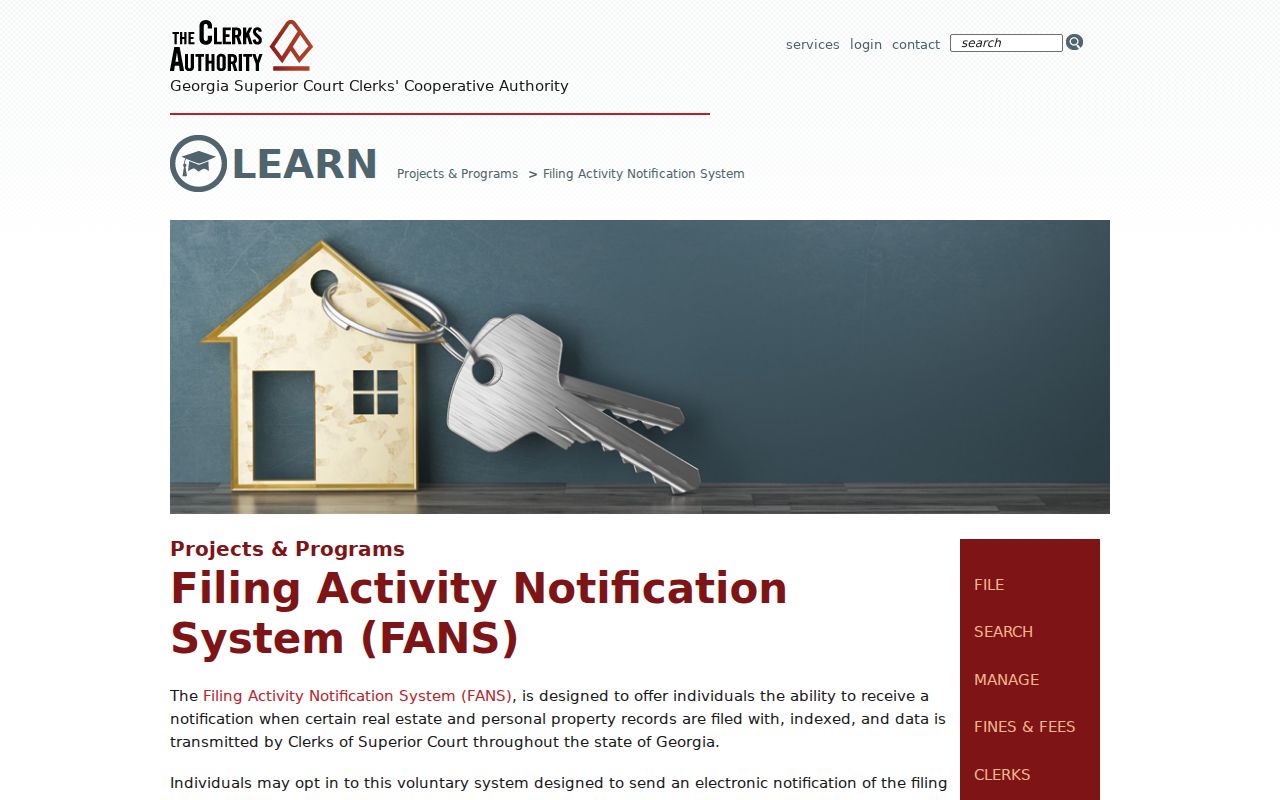
Use an alert as early warning, but keep the recorded instrument as the source. The separate FANS account screen is where a Carroll County owner can begin registration.
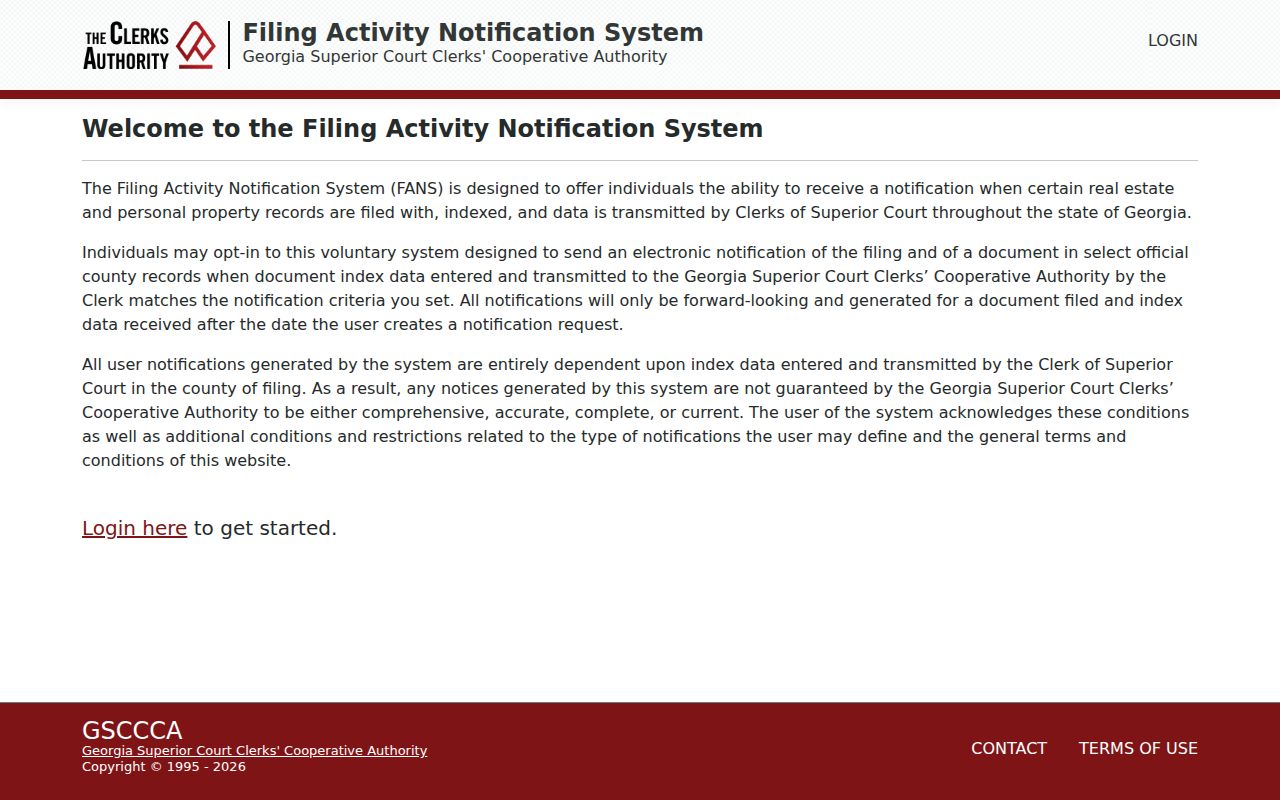
The signup view confirms that monitoring is opt-in and separate from searching the deed index itself.
Obtain a Carroll County Deed
Start with an online index result. Save the full party names. Save the recording date, the document type, and the book and page. View the image through GSCCCA when it is available. If online access fails, take those details in hand. Then contact or visit the Clerk's Real Estate and Recording division. For an older instrument, add the Kofile index year and the historic volume reference. Ask whether a plain or certified copy fits the intended use. Request the current fee before payment.
Mail and records-request channels work when a trip is not practical. Carroll County's open-records procedure accepts requests by phone, fax, email, mail, or drop-off. The office-specific deed route should come first. Describe the exact instrument rather than asking staff to create a title report. Georgia agencies may charge lawful search, retrieval, redaction, and copying costs.
Recorded is not guaranteed. Carroll County deed records show accepted filings, not every possible interest, defect, or claim. Use qualified title help when clear title matters.
A certified copy proves the copy matches the Clerk's record. It does not certify that the grantor owned every right stated in the document. That distinction is small in words and large in a purchase, estate, or boundary dispute.